


How Does the Road Traffic Surveillance Camera System Work?
With the significant increase in population and the continuous development of urban areas, ensuring traffic safety and managing vehicle flow has become a major challenge. In this context, using a traffic surveillance camera system has become an important tool to improve traffic situations, enhance security, and move towards a civilized and modern urbanization. So, how does the road traffic surveillance camera system work? Let’s explore the details with Eyesea Technology Joint Stock Company in the following article!
What is the Road Traffic Surveillance Camera System?
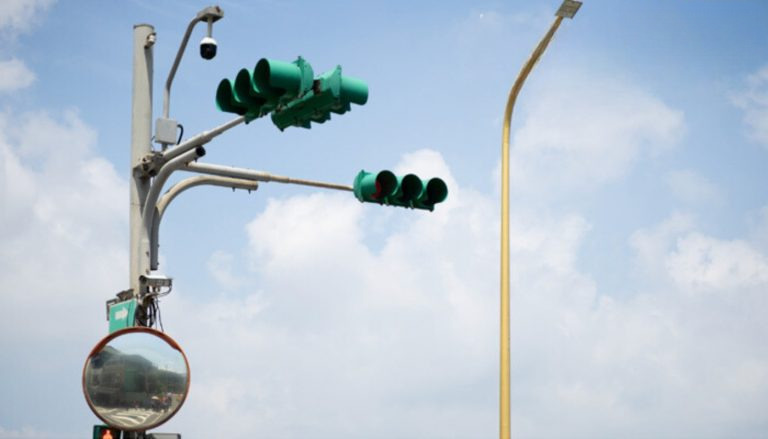
The traffic surveillance system consists of a network of intelligent cameras installed at strategic locations on intersections, bridges, and major roadways to monitor and record traffic activity. Typically, the cameras in the traffic surveillance system are connected to a management center.
At this center, the image and video data from the cameras are collected and transmitted for processing and analysis. During this process, information regarding traffic conditions, violations, and special events on the streets is extracted and evaluated.
With advanced technology, the traffic surveillance camera system offers several important functions to improve traffic management and safety. It monitors and records detailed images of road activities while analyzing and identifying violations. Additionally, the system plays a crucial role in providing evidence for the investigation and analysis of traffic accidents, thereby helping to enhance safety within the public transportation system.
What Does the Traffic Surveillance Camera System Include?
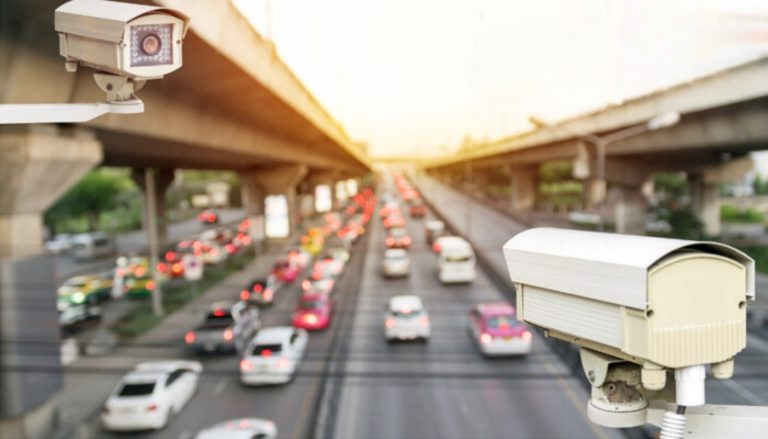
The components installed along the roadways include:
- · Specialized Cameras: For observing and recording images of traffic on the roads.
- · Speed Measuring Devices: To measure and record information about the speed of moving vehicles.
- · Control Devices: To adjust the operations of other equipment on the roadway.
- · Electromagnetic and Mechanical Devices: Important for warning and directing traffic.
- · Server System: Used for storing and processing data from the roadway devices.
- · Database Management System and Application Software: For managing and analyzing collected traffic data.
- · Communication System: For transmitting information and interacting with authorities and the public.
- · Processing and Mining Machines: To perform data processing tasks and provide relevant information.
Transmission Network
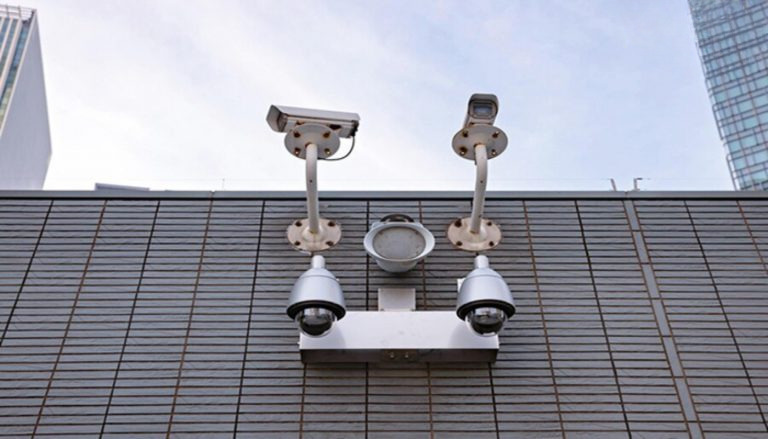
- · This network acts as a connection between devices along the route and the operations center.
- · It can utilize either wireless or wired networks for data transmission.
In general, the images and data collected from the traffic surveillance camera system are transmitted to the operations center via the IP network. At the operations center, this data will be processed and analyzed to provide detailed information about traffic conditions such as vehicle speed, traffic volume, and violation behavior.
Model of a street traffic camera system.
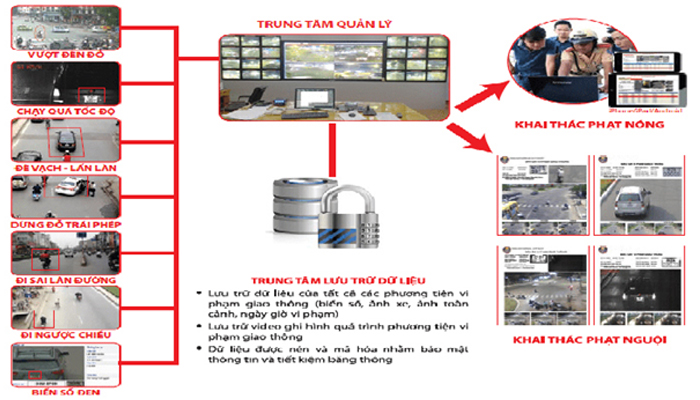
The concept of a “street traffic camera system” includes technological devices used to monitor and manage all traffic activities. Specifically, this system typically comprises a network of cameras installed at strategic points on the streets, such as intersections, highways, junctions, or areas with high traffic density. These cameras have the capability to observe and record images and videos of events and traffic activities occurring within their monitoring range.
With comprehensive “surveillance” capabilities, the street traffic camera system is a powerful tool that helps authorities monitor and address traffic violations. Additionally, data from this system is also used to analyze and improve infrastructure, thereby creating a safe and efficient traffic environment.
Automatic red light violation detection system.
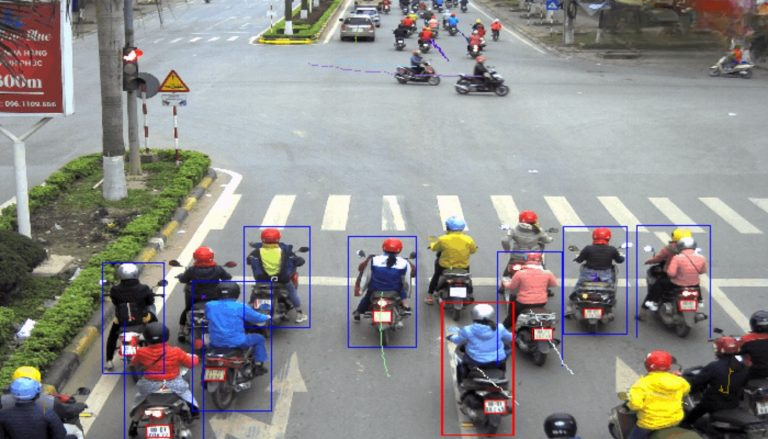
The automatic red light violation detection system is part of the traffic surveillance camera system, designed to automatically detect and record behaviors related to running red lights. Specifically, this system is typically installed at intersections to observe and record the actions of vehicles as they pass through junctions. When a vehicle is detected running a red light, the system will automatically activate and record video of this violation.
Consequently, the evidence of the violation will be extracted by the traffic surveillance camera system in the form of clear and detailed images, allowing for visibility of the traffic light status and the license plate of the violating vehicle. Additionally, the video recording the entire violation process will be saved for easy processing by management authorities later on.
Automatic speed violation detection system.
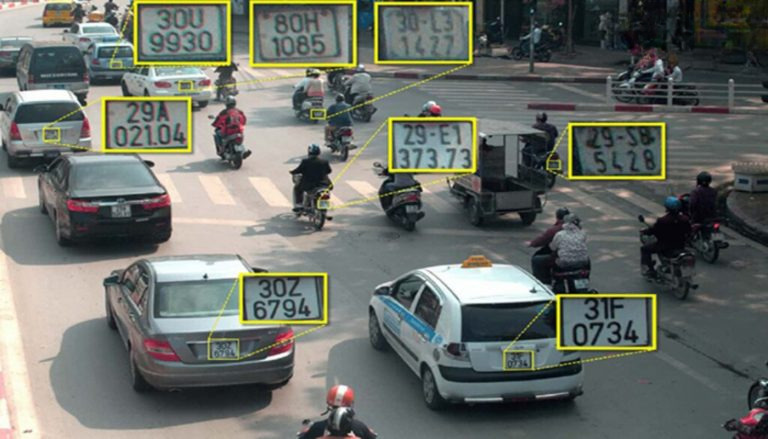
The automatic speed violation detection system is designed to identify and record instances of speeding on the streets. In this system, cameras are equipped with sensors or analytical software to detect and measure the speed of vehicles passing by.
Specifically, once a vehicle exceeds the permitted speed, the system will automatically activate and record images and videos along with other information such as the time and location of the violation. This data is then transferred to the management center for identification and processing.
It can be said that the automatic speed violation detection system plays a crucial role in enhancing road safety by helping to prevent and address dangerous behaviors on the road. Additionally, it contributes to reinforcing compliance with speed regulations and ensuring the safety of all road users.
High-resolution surveillance camera system.
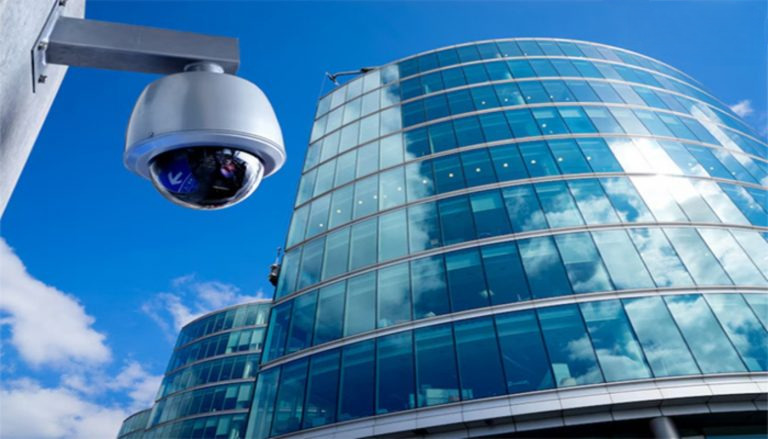
The high-resolution surveillance camera system is a type of traffic surveillance system that uses cameras capable of capturing images and videos in Full HD resolution. The notable feature of this system is its ability to provide extremely detailed and sharp images and videos, enabling managers to observe and analyze traffic activities more accurately and effectively.
This technology is commonly used for license plate recognition, driver identification, and detecting traffic law violations. Accordingly, the images and videos recorded by the cameras will be used to support traffic management, investigate accidents, and ensure safety on the streets. Additionally, data from the high-resolution traffic surveillance camera system is stored for easy access and review when necessary.
Monitoring center.
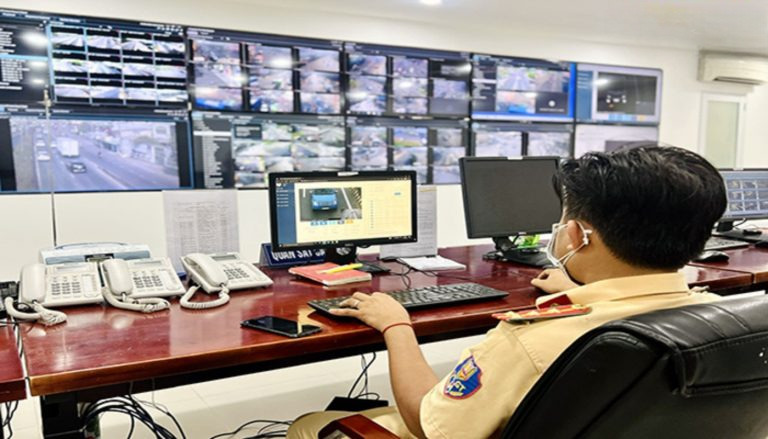
The monitoring center can be considered the “brain” of a comprehensive traffic surveillance camera system. It is where devices, technology, and personnel are concentrated to manage and operate traffic effectively. Traffic monitoring centers typically have the following main functions:
- · Traffic Monitoring: Directly observing and monitoring traffic junctions, vehicle flow, and traffic conditions on the streets through an intelligent traffic surveillance camera system.
- · Analysis and Evaluation: Analyzing data from the traffic camera system to assess traffic conditions and forecast potential risks to implement suitable improvements and adjustments.
- · Control and Operation: Depending on the specific traffic situation, the monitoring center can directly control traffic by activating traffic lights, adjusting signal timings, or providing warning information to road users.
- · Support Coordination and Emergency Response: The monitoring center serves as the main communication point between authorities such as traffic police, fire services, ambulances, and relief organizations to facilitate timely support in case of traffic accidents or other emergencies.